Oh possum, you are a hero in the heat

sugar glider joey
A handful of help…a sugar glider joey from an earlier rescue by Wildlife Victoria carer Nalini Scarfe.

[dropcap style=”font-size: 60px; color: #DC943C;”] T [/dropcap]he recent heatwave from hell may have lifted, but the work never stops for wildlife carers who are at the frontline when it comes to caring for distressed, injured or lost native animals.

One of those who willingly volunteer their time to such a task is Nalini Scarfe, who grew up in Warrnambool, but who now lives in Melbourne where she studied orchestral percussion and now works as a music teacher. (Nalini’s parents are the well-known and prolific authors Allan and Wendy Scarfe, who still live in Warrnambool).

join us2

If you thought wildlife rescue was all about cuddling cute creatures and bottle-feeding abandoned babies, the reality is that caring for wild animals takes skill, patience and a commitment to work around the clock.

Ringtail (640x449)
Ringtail joeys, like this one, were among the most common rescues during Victoria’s recent heat wave, although this little juvenile was from an earlier rescue.

[dropcap style=”font-size: 60px; color: #DC943C;”] D [/dropcap]uring the extended heatwave from January 14 to 17, when temperatures in Melbourne topped 44 degrees, the Wildlife Victoria hotline went into overdrive with hundreds of calls from people reporting dehydrated and heat stressed wildlife.

Nalini, as a qualified carer, found herself looking after 14 ringtail possums – four adults and 10 babies – with the juveniles requiring feeding every four hours.

“I haven’t been this sleep deprived since I was a new Mum 18 years ago!” she joked in a Facebook post.

nalini smaller
Nalini Scarfe assists a wombat on its way: just one of the many native animal rescues Nalini has performed over the past five years.

[dropcap style=”font-size: 60px; color: #DC943C;”] W [/dropcap]hen we contacted Nalini, she also told us about one particular baby brushtail possum that she found on her property during the heatwave…


[quote] I heard this baby joey squawking in the woodpile at home. Sometimes during extreme heat or due to stress, mothers will drop their (suckling) young in order to survive.

I named him Manic as he was a very anxious young fellow. Feeding time involved him throwing his arms and legs around so wildly that more milk ended up being thrown around the room than went into his mouth.

Generally, care in the first couple of days is more difficult as they don’t like the taste of the formula or the feel of the artificial teat.

As soon as the cool change came through on Friday night,  I took him back out to the carport hoping that his mum was hiding somewhere inside and had survived the heat: it would have had to have been extreme in the carport roof under the corrugated  metal roofing.

Manic only had to call out once and there was a very noisy crashing and banging as Mum came out of the roof cavity.

I climbed up the ladder and held him out to her. She charged at me and I thought she was going to take my head off: she was the biggest brushy I’ve seen. She didn’t attack me in the end as she was just so happy to have her baby back.

She spent the next half and hour just cleaning him ( I guess he stunk of humans) whilst he put his head in her pouch and drunk like there was no tomorrow….

Apparently the chances of reuniting Mum and joey are good up to five days after the separation, so this was a happy ending.” [/quote]

Brushtail and Manic (1 of 1) (1024x921) (1)
Manic and Mum reunited…with Manic kicking back for a much-needed and long drink.

[dropcap style=”font-size: 60px; color: #DC943C;”] M [/dropcap]anic is just one of many wild animals Nalini has helped over the past five years: the others include heat stressed ducklings, abandoned sugar glider joeys and an echidna hit by a car.

And while Nalini no longer lives in Warrnambool, we think she deserves a coffee next time she is visiting her parents, so Nalini is our second quiet hero for 2014.

[box] The Wildlife Victoria emergency number is 13 000 94535 or its office can be contacted on 03 922 44290 [/box]  

newsletter Why Not Stones Meet some of our other quiet heroes…


Second Venture horse rescue

Walking with strength and purpose: Susie Alexander

On the road with the Schoolies

Tackling a hidden terror: Pat McLaren

A life-changing adventure: Schoolies with a Cause 

A winner for Woodford

United we stand – Wbool Uniting Church


A Chinese coat of many memories

[box] Welcome to Treasures: this is a new section where we invite you to tell us about an object or item that you treasure. It might be sentimental, it might be valuable, it might be part of a collection, or it might be something you just can’t live without. If you have a treasure that we can feature here, let us know! Email us at editor@bluestonemagazine.com.au and tell us about it.[/box]


This week, well-known South-West Victorian DI CLANCHY – a former librarian, former Moyne Shire councillor, founder of the ex-Libris book festival in Port Fairy and now a travel consultant – tells us about a treasured item from her travels to China…


Chinese coat

[quote]

[dropcap style=”font-size: 60px; color: #A5CECD;”] A [/dropcap] treasure from China you ask? That would definitely be a coat made of richly embroidered blue silk, elegant, feminine, and stylish. I bought it at a Friendship Store in Guangzhou in 1990, happily handing over several Foreign Exchange Certificates (FEC) as payment.

The coat is a deep turquoise blue-green in colour, and hangs just below the knee. Panels of ivory-white circle the neck, define the front, and continue around the hem. Wider panels of the same colour trim the sleeves. Black silk piping separates white from blue.

But all over the entire coat is embroidery!  Pinks, greens, oranges, reds, blues, yellows, so many colours and shades. Large peonies are surrounded by circlets of narcissus, violets, daisies, roses, irises. Chrysanthemums decorate the wide sleeves.

The coat is wearable art.

I was in Guangzhou in February, 1990 with a group of women, just friends travelling together, nothing organised formally. We stayed at hostels and cheap hotels, travelled by train to Xi’an and back ( 3 nights each way), rode local buses with packs on our backs, ate out in local restaurants, used the local currency as well as FECs and wore out our shoes and our Lonely Planet guides as we walked the streets  of Guangzhou and Xi’an. It was so special to have my 13-year-old daughter, Alice, sharing the adventure with me.

clanchy in china round
Di Clanchy catches up with a local during her trip to China in 1990.

[dropcap style=”font-size: 60px; color: #A5CECD;”] T [/dropcap]hat was 1990. No Foreign Exchange Certificates in China now, just one currency and the concept of Friendship Stores for foreigners and the elite has also gone.

Cars have mostly replaced bikes on the roads, and you can find your way now more easily with “Pinyin” (our alphabet) signage, and English is spoken more widely. Instead of the severe Mao suits we saw on our early trip, Chinese women of 2014 wear elegant contemporary clothes.

Speaking of fashion: I have this treasured 23 year old coat which I hope will never go out of style. I have worn it to special events, operas and dinners. It graced my wall for a time, until I worried that the colour would fade.

Treasured for its beauty- and the many memories it holds, I hope that the coat will continue to be worn, appreciated, and loved, into the future. It’s a treasure that is up there with my daughter’s letter to the tooth fairy, my grandmother’s christening mug, a lock of my son’s hair, and lots and lots of photos.”

– Di Clanchy

[box type=”bio”] Di Clanchy specialises in affordable women’s travel to China and Vietnam through her business, China Birds. You can visit her website here (and maybe find a treasured coat of your own!)[/box]

Logo Smile newsletter You might also enjoy…


Nothing minor about this mini – have you seen this Mini Minor?

The smallest violin in Warrnambool

A well-travelled junket

Bowlin, bowlin’, bowlin’….

Lunch order, 1975?

signed, Fletcher Jones


Time for a fresh start with Australia Day

flag cape

Analysis – Carol Altmann

[dropcap style=”font-size: 60px; color: #A5CECD;”] S[/dropcap]omething ugly happened in a Warrnambool supermarket last week.

A young woman wearing what she no doubt thought was a “patriotic” t-shirt for Australia Day, hurled abuse at another couple of women for speaking in Italian.

“Why don’t you speak f*&*%ing English!” she yelled, among other things.

Shortly after hearing about this incident, I was driving into town and noticed the tradesman’s van in front of me proudly displaying a bumper sticker: “Like it, or leave!!”

These might not be earth-shattering incidents on their own, but more and more people are finding it deeply troubling that some Australians now feel it is acceptable – even patriotic – to behave in this way.

Since One Nation leader Pauline Hanson wrapped herself in an Australian flag 16 years ago and signalled a shift in the political landscape, Australia Day has taken on a different tone.

Flag waving and overt displays of nationalism were once something we poked fun at in others, especially when it came to highly patriotic Americans, and Australia Day was once little more than a lazy long weekend that may – or may not – have actually fallen on January 26. (It was only agreed in 1994 to hold Australia Day on January 26 regardless of what day of the week it fell).

For a younger generation, in particular, Australia Day all seemed pretty boring and and rather than wave the flag, they preferred to wave the green-and-gold colours of our sporting teams and sing “Come on Aussie, Come on, Come on.”

Then came a series of pivotal events in the late 90s and early 2000s which turned things on their head and Australia’s nationalism began to turn nasty.

 be-alert-but-not-alarmed


[dropcap style=”font-size: 60px; color: #A5CECD;”] A [/dropcap]s a result of this changing political landscape – the launch of One Nation, the 9/11 terrorist attacks, a hard line on refugees – Australians learned to become fearful and defensive.

Some of us began to mis-trust people who didn’t look like “us”, or talk like “us” or behave like “us”, because they were out to “get us”. Remember the post 9/11 fridge magnets that encouraged us to be alert not alarmed and to report any suspicious activity on a special hotline?

In the years shortly after, bumper stickers and t-shirts began to appear with a picture of the Australian flag and slogans like “F**k off, we’re full”, “Like it or Leave” or “100% Aussie”.

And instead of waving the flag, we began to wrap ourselves in it, like a shield. For me, this was one of the most memorable images of the Cronulla riots in 2005: angry young men and women draped in Australian flags, hurling abuse.

An influx of cheap, imported patriotic merchandise means that everyone can now cover themselves – and their cars – in the Australian flag on Australia Day, except it no longer feels like Australia Day.

To me, it has increasingly felt like Us and Them Day.

tshirts

[dropcap style=”font-size: 60px; color: #A5CECD;”] O [/dropcap]f course Australia Day has always been “Us and Them Day” for Australia’s indigenous population. I find it bizarre that we still expect Indigenous Australians to join the party and not be so hung up about January 26 as marking the beginning of the end for their ancient culture. (Australian of the Year Adam Goodes emphasised this point at the weekend.)

Yet at the same time, Aldi recalled a range of Australia Day t-shirts because the slogan “Australia: Est 1788” was considered offensive – and it is – but isn’t the choice of January 26 underpinned by this very same sentiment?

Perhaps the best way to celebrate our nation as a welcoming, multicultural and tolerant country with a rich indigenous heritage is to recall the whole day and start afresh.

After all, it has only been since 1994 that all the states and territories have, as one, marked January 26 as a public holiday. Various alternative dates have since been proposed – the anniversary of the Eureka Stockade, the anniversary of the Mabo Native Title decision – but each comes loaded with its own politics.

So I would suggest picking a date that is already a glorious, relaxed and apolitical public holiday: Boxing Day.


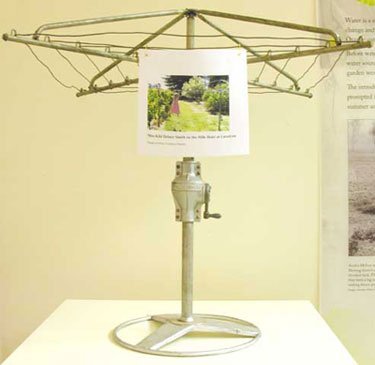
HillsHoist


[dropcap style=”font-size: 60px; color: #A5CECD;”] A [/dropcap]side from South Australia, where Boxing Day is Proclamation Day, Boxing Day now has little symbolic meaning in Australia. Ask anyone under 45 what Boxing Day is about and they will probably suggest it is the day the kids starting fighting over their Christmas toys or the first day of a big cricket match.

The origins of Boxing Day, however, are steeped in the tradition of giving, of kindness, of showing respect for those less fortunate.

How perfect, then, that December 26 become Unity Day.

A day when we unite as a nation: be it at the MCG watching the Ashes and reviving “Come on Aussie, Come On” (which is so much gentler than “Aussie, Aussie, Aussie Oi, Oi Oi”) , or watching the yachts set sail for Hobart, or simply enjoying the calm that comes after Christmas.

And instead of wrapping ourselves in the Australian flag, maybe on December 26 we peg out a flag on a Hill’s Hoist, together with every other flag that we feel represents who we are, so that we are a nation covered in flags – all with the sunshine and breeze blowing through.

“Happy Unity Day”…I like it.


flag designs2

Logo Smile newsletter For more opinion pieces…


Broken link for Artlink

Losing sleep over a lot of rubbish

Close Flagstaff Hill; save Fletcher Jones

 A little less conversation, a little more action

When scrutiny is sub-standard, democracy suffers


Moooove over cows, the goats are coming!

melissa lewis kids
A house full of happy kids: Melissa Lewis with Mason, 2, Paddy, 4, and one of the 50 goats she is raising for milk production in her venture, Buddy Goat.

[dropcap style=”font-size: 60px; color: #8F9F59;”] G [/dropcap]iven Allansford is deep in cow country, Melissa Lewis is somewhat of a black sheep by using her 20-acre Allansford property to breed and milk goats.

Melissa, who grew up on a dairy farm near Mortlake and is a qualified animal nutritionist, has spent the past 18 months building up a herd of about 50 goats with a mix of Toggenburg (brown and white in colour), Saanens (all white) and British Alpine (black and white) that are all known for their high levels of milk production.

And it is the raw goat’s milk – and byproducts including cheese, yoghurt and icecream – that Melissa is most interested in developing through her Buddy Goat brand, rather than the more conventional path of using the milk to create soaps and cosmetics.

Despite there reportedly being 19 goats on board the First Fleet in 1788, Australia has never really embraced the idea of enjoying a chilled glass of fresh goat’s milk in the morning.

“It’s funny, but the thought of drinking goat’s milk puts a lot of people off and they are far more comfortable with goat’s cheese, yet there are so many health benefits to goat’s milk,” Melissa explains.

melissa lewis2
Melissa Lewis with the former cow dairy that last September was converted to suit the much smaller goats.

[dropcap style=”font-size: 60px; color: #8F9F59;”] M [/dropcap]elissa experienced these benefits first hand when her first son, Paddy, 4, developed asthma several years ago and she changed his diet from cow’s to goat’s milk. The asthma attacks stopped.

“We forget that goat’s milk is actually consumed more than any other milk around the world. It is easier to digest and a lot of people who can’t handle cow’s milk can drink goat’s milk,” Melissa says.

She tells the story of one man who was intolerant to cows milk but tried her goats milk and, for the first time in many years, was able to eat a bowl of breakfast cereal with milk. Another woman uses Melissa’s raw goat’s milk to bathe her young daughter who suffers severe eczema.

Most of Melissa’s raw goat’s milk is sold by a distributor into Melbourne and Geelong where there is a big demand among particularly the Greek and Italian communities for goat’s milk with which to make cheese.

milking goat
Paddy takes an udderly different view of where milk comes from, having been raised on goat’s milk.

[dropcap style=”font-size: 60px; color: #8F9F59;”] D [/dropcap]ue to stringent food regulations, Melissa is currently only permitted to sell her products marked for “cosmetic use only” and “not for human consumption”, but how customers choose to use the milk is ultimately their decision.

Having spent the past couple of years proving there is a growing market for goat’s milk, Melissa is planning to move into the next stage of commercial production.

Last September she and her husband Darcy, a fencing contractor, converted a cow dairy into a goat milking dairy where her girls line up each day – or twice a day when the milk production is high. They also plan to transform part of a large shed on their property into a commercial kitchen.

It is a significant investment, with a pasteuriser costing around $25,000 alone.

For Melissa, however, it is all about diversification. Apart from her own property, Melissa and her sister Nicole Ritchie run a 200-acre farm at Mortlake, across the road from their parent’s 1000-acre property where the sisters also agist cattle.

Two young sons and another baby on the way have also made life a little busier for Melissa, but she still has plenty of energy and enthusiasm for her new venture.

“It’s about trying new things, seeing where they go and diversifying, because you can’t survive off farming alone any more.”

[box type=”bio”] For more information on Buddy Goat, you can contact Melissa at goatsmilk@live.com.au or find her on Facebook here. [/box]

newsletter Art Music StonesYou might also enjoy…


Lana’s garden of Eden

Organic food idea grows and grows

Gorge-ous taste of chocolate

Spread: spreading the love of food

Buffalo cheese a Shaw thing

Small is beautiful at Newton’s Ridge

Thriving on flower power at Naringal


Books pave new road for Melbourne

dennis round
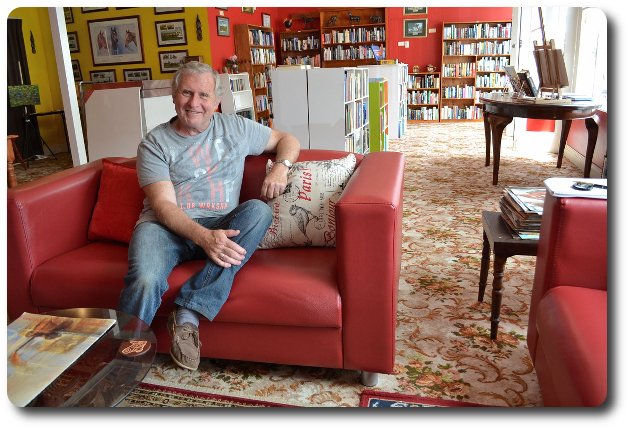
After 27 years working in disability services around south-west Victoria, Dennis Melbourne has taken a new path and opened a secondhand bookshop in Koroit.

[dropcap style=”font-size: 60px; color: #A02F2F;”] M [/dropcap]any public servants, at some point in their lives, have sat at their desk and dreamt of opening a coffee shop, or a bookshop, or maybe both and Dennis Melbourne was no exception.

Dreaming and doing, however, are two very different things, and Dennis has only had the opportunity to pursue his life-long interest in books since retiring from the Department of Human Services last year.

Dennis, who lives in Koroit, has spent the early part of the summer setting up his second-hand bookstore, The Bookworm Gallery, in what was an empty shopfront at 133A Commercial Rd, Koroit, and has since had a “soft” opening while adding the finishing touches.

“I have always been a reader and loved books. Whenever I have moved, there has always been three or four bookshelves of books that have had to come with me,” he laughs.

After 27 years in disability services, including his most recent position as manager of disability accommodation across the south and western parts of Victoria, Dennis is ready to put his heart into a venture that may not make a lot of money, but which he does for the joy of it.

“I am opening gentleman’s hours – 10am to 4pm – and if I have a quiet day, I have a quiet day. I am just enjoying it,” he says.

The first few weeks, however, have been surprisingly busy, particularly during the recent Lake School of Celtic Song and Dance Festival at Koroit when “the shop filled up with Irish people looking for books”.

“Another woman wandered in and looked around and said she hadn’t seen an ‘old-fashioned’ book shop like this for ages,” Dennis adds.

dennis bookshop
Fresh start: Dennis has retained much the building’s character that it had when it was a newsagency.

[dropcap style=”font-size: 60px; color: #A02F2F;”] I [/dropcap]n setting up the bookshop, Dennis made a conscious decision to not change too much of the building’s character, so the Axminster floral carpet will stay, as will the original signwriting on the window advertising The Argus newspaperThe mood music is also just as likely to come from his vinyl LP collection as it is from a cd-player.

“But I have bought a coffee machine and a barista friend is going to teach me how to make coffees,” Dennis says.

While bookshops have no doubt suffered from the arrival of e-books, Dennis is among those who believe quaint, personalised bookshops still have a place and people still enjoy browsing and reading “the real thing”.

“Children also love to read. I have a spot set aside for them and they come in and they love reading the kid’s books,” he says.

A new bookshop in the main street of Koroit also brings a spark to a small town that is still yet to take off in the way that Port Fairy has, despite being cute, historic and only 10 minutes from the beach.

“Quite a few people living here now have done the seachange thing. I had a couple in here the other day who had sold up in Melbourne and were on their way to South Australia when they passed through here and thought, ‘this’ll do us,” Dennis says.

[box type=”bio”] The Bookworm Gallery is at 133A Commercial Rd, Koroit (next door to the newsagency) and is open Tue-Fri 10am to 4pm and Saturday 9am-4pm. [/box]

newsletter Eat And Drink Stones You might also enjoy… 


What I am reading: artist Gareth Colliton

Biblio-Art prize launched at Blarney Books

What I am reading: ABC Radio south-west breakfast presenter Jeremy Lee