Conservation and creativity in the same basket

cherree densley_4
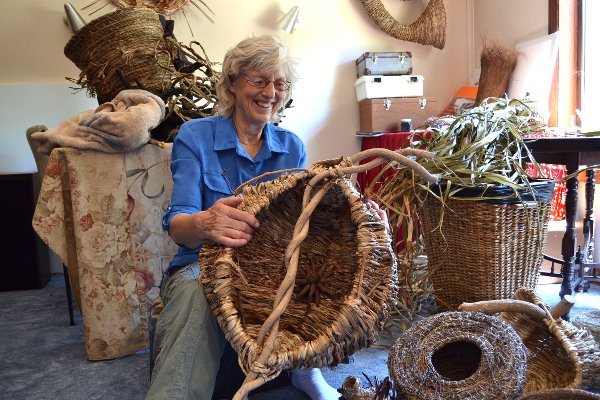
Cherree Densley in her Killarney studio – a re-commandeered bedroom – where she creates baskets using the timeless techniques of many cultures.


[dropcap style=”font-size: 60px; color: #A02F2F;”] B [/dropcap]ushwalking with Cherree Densley would be an eye-opening experience, as not only does she know the names of hundreds of native plants, she can also see the potential for each to be the inspiration for a stunning work of art.

Since retiring from her 30-year career as a secondary school teacher about 10 years ago, Cherree has devoted a large portion of her life to plants and, through them, tapped into her twin loves of conservation and creativity.

On the outside, the garden of her Killarney home is a two-acre sanctuary of low-water succulents, bulbs, native plants and perennials while inside, the remnants and off-cuts of native plants and grasses are transformed into beautiful baskets and fibre sculptures.

Cherree recently reclaimed her son’s old bedroom to create a simple, sun-filled studio in which she spreads out the seed pods, grasses, leaves, prunings and various fibres that she has collected in her travels, or from her own land, and that would normally be composted or left to rot on the ground.

From this raw harvest, she creates the designs that she has sketched in her journals as part of daily ritual that keeps her disciplined and captures inspirational ideas before they float away.

[quote]

I find it is a lovely thing to be able to make something useful or beautiful from things that might normally be thrown away,” Cherree explains. [/quote]

“You can take this discarded material and turn it into something entirely new: you can make an object that is not just creative, but which also has a purpose.”

cherree densley_19
The exquisite range of baskets reflect the raw materials from which they are made.

[dropcap style=”font-size: 60px; color: #A02F2F;”] C [/dropcap]herree’s range of baskets and fibre sculptures is astonishing and shows influences from her fascination with how baskets have been used in various cultures for thousands of years.

Some of her work reflects the baskets and eel traps made by Indigenous Australians, others have a distinct African style, while others are uniquely her own.

“I collect books on basket-making and was reading just the other day how an African community used tightly woven baskets to store their beer,” she says.

“With almost any culture, you only have to scratch the surface and there is a history of basket-making there.”
cherree densley_6_01
“I find it is a lovely thing to be able to make something useful or beautiful from things that might normally be thrown away.”


[dropcap style=”font-size: 60px; color: #A02F2F;”] C [/dropcap]herree also makes much larger sculptural works using fibres and found objects and is currently preparing for a second exhibition with her sister, painter Di Holland, who lives near Edenhope. The pair held their first SisterShow in 2012 at the Warrnambool Art Gallery.

The SisterShow2 exhibition will be held at CEMA, Portland, from March 24-April 29  and will again see Di’s meticulous wildlife paintings paired with Cherree’s sculptural works. The 2012 show included, for example, a large painting of a platypus by Di that was exhibited alongside a metre-long platypus nesting burrow woven by Cherree.

This time, the challenge includes enhancing Di’s painting of a Southern Right whale, but Cherree is already well underway with a piece that reflects the whale’s ‘song lines’. The sisters plan to exhibit 25 large paintings and 3o sculptural works in total.

cherree densley_20
This delicate basket made of New Zealand flax was part of an exhibition held at Whalebone Gallery, Port Fairy.


[dropcap style=”font-size: 60px; color: #A02F2F;”] P [/dropcap]erhaps not surprisingly, the sisters come from a line of grandparents and great grandparents who loved gardens and crafts – textiles, leatherwork, basketry, mosaics, floristry, spinning and dyeing wool – and both grew up in bushland near Heywood.

Cherree used her superannuation to return to those roots by buying a rare slice of 200 acres of native bushland near Portland that is protected with a covenant to ensure its preservation into the future. Since buying the property, Cherree has recorded 299 individual plant species growing on the property.

“I am really struggling to reach the 300, but I think I may have found a native mint that will take me over the line,” she says, laughing.

cheree baskets_6
To market, to market: some of Cherree’s work at the recent Port Fairy farmers markets.

[box] Cherree Densley’s work is often for sale through the Port Fairy markets and F Project pop-up markets at The Artery, 224 Timor St, Warrnambool. Cherree also offers basket making classes at her home for individuals or up to groups of eight. You can contact her on 55 68 7226 or via cherree@hotkey.net.au for more details.[/box]

newsletter Eat And Drink Stones  You might also enjoy…


Home is where the art is: Karen McKenzie

Heather Wood: art springs from the heart of Seaview.

Revealing the layers of a sapphire: Kate Melican Rollo

Smooth lines inspired by the ocean: Damian McDonald

Hot glass melts hearts: Robert Gatt and Freya Marriott


Oh Biba, look at you now!

Biba_Salon36
The transformation of 222 Timor St, Warrnambool continues, with a new hairdressing salon filling the bottom floor. Image courtesy of Sinead Murphy.

shopfront
As it was before the transformation by Luke and Nat Taylor began early last year.

[dropcap style=”font-size: 60px; color: #A02F2F;”] L [/dropcap]ate last year, Bluestone Magazine captured the transformation of 222 Timor St, Warrnambool, from a derelict heritage-listed building to a wonderful, character-filled space that was ripe for a new tenant.

And while the building is still not completely finished – owners Luke and Nat Taylor have plans for an apartment and residence on the top floor – it has started a new chapter in its 164-year history with the arrival of the upmarket hairdressing salon, Biba.

It is the first Biba to be opened outside of metropolitan Melbourne and marks a return to Warrnambool for owner, Mia Nicolson, who had previously worked at Paris Hair and Beauty in East Warrnambool.


Biba_Salon06
Mia Nicolson, left, has made a conscious decision to keep the character of the building…while adding some quirky and funky touches. Image courtesy Sinead Murphy (http://www.sinead-murphy.com/)


[dropcap style=”font-size: 60px; color: #A02F2F;”] M [/dropcap]ia has made a conscious effort to capture the character of the old building, while adding some very modern and funky touches.

There is a vintage barber’s chair (picked up from the Mailors Flat secondhand store), a heavy work bench from Melbourne, and old wooden boxes from Ponting Bros that Mia found in her grandmother’s stables, but also an eye-catching, off-beat mural by local artist Felix Pilling that dominates one wall of the colour bar. Recycled leadlight glass enhances an antique window in the same room.

“Biba salons have an industrial look, so I have added some of those industrial features while also linking in to the heritage aspects of the building,” Mia explains.

The series of photos below capture the full transformation. The Biba images were taken by talented graphic designer and photographer Sinead Murphy who has kindly given us permission to reproduce them here. (You can find Sinead’s website here.)

lukefamily
Nat and Luke Taylor, with son Lewis, in the front room of the building early last year.

Biba_Salon18
The same space today is almost unrecognisable and forms the main entrance to the salon. The vintage barber’s chair is to the left and the old workbench doubles as a reception desk.

shop_64
As it was: the back room behind the main salon space.

Biba_Salon21
The same space converted into a ‘colour room’, complete with the leadlight-enhanced antique window.

Biba_Salon26
One long wall of the colour room now features a mural by local artist, Felix Pilling.

newsletter Eat And Drink Stones You might also enjoy…


T-shirt captures the infamous ‘Cri’ 

Who is the Granny behind Granny’s Grave?

Who will step up for Fletcher Jones?

Art is the heart of old Hawkesdale home

Behold this bluestone beauty: Fennessy’s at Rosebrook

Colonial oven still makes a crust, Dunkeld

Secrets of an old shoe 


Newton’s Ridge Chardonnay

logo-newtons-ridge (edited)

CLOSED: Winner Jan Allan

[dropcap style=”font-size: 60px; color: #A99E90;”] W [/dropcap]atch out wine lovers, we have something very special for you!

This week we are giving our Bluestone Club members the chance to win a delicious bottle of Newton’s Ridge Chardonnay (valued at $28) made by supremo David Falk at his Cooriemungle vineyard.

To be in the draw, you need to be a paid subscriber (aka, a member of the Bluestone Club) and email us the answer to this simple question: what vintage is the bottle of Penfold’s Grange featured in our Tipsy Tips #5?

Email us at editor@bluestonemagazine.com.au. Competition closes February 21.

The winner of this competition was Jan Allan.


T-shirt captures the infamous ‘Cri’

Lawyer ROY REEKIE, who recently returned to live in his home town of Warrnambool, tells us about an item that is dear to his heart in this week’s Treasures:


roy reekie
Roy Reekie with his treasured Cri t-shirt (and matching sunglasses!) outside where the Criterion Hotel stood for more than 140 years before being demolished last year.


[quote]

[dropcap style=”font-size: 60px; color: #0A0A0A;”] I [/dropcap] treasure this t-shirt because it incites memories of the (in)famous, dear-departed Criterion Hotel in Kepler Street, Warrnambool.

The Cri was one of three pubs that my high school friends and I would visit, despite being under-age…

Pat Farrell holding court in the front bar with the Wooden Eye joke is one vivid memory – most likely burned in by repetition.

Cri gigs by Psycho Sloth, the Bondi Cigars and Rollerball all figured highly in the development of my musical appreciation, with loud, raucous, guitar-driven rock a common thread.

My 21st birthday downstairs in Bungs also comes to mind: teacher and singer/guitarist Don Cowling played all night – a happy troubadour until he smashed his back windshield packing his amps away.


Criterion 2013_02
After a fire, the shell of the Criterion Hotel was all that remained until its demolition.


[dropcap style=”font-size: 60px; color: #0A0A0A;”] T [/dropcap]he guys on this t-shirt – the Cri Pigs – hold a special place in my memories. They were ex-clients; brothers who dabbled in minor, sometimes violent, but always thoughtless crime. They could play pool like demons and held those two Cri tables with an iron grip.

I went in there one night, with my sister Kathy, for a few celebratory beers for some reason.  The two brothers held both tables, having played and intimidated everyone else out of challenging them.

Given that I knew them, I bowled up, chatted a while, shouted them some beers and got shouted back, before putting it to them – the best of 3 games; doubles; my sister and I against them. They scoffed but didn’t factor in Kathy’s consummate pools skills and my misspent youth and determination.

Three-nil later, Kathy and I held the tables, and kept them all night with the Cri Pgs doing their snarling utmost to win them back.

A t-shirt of memories – and well-earned, I’d say.”

[box] Do you have a treasure? It might be sentimental, it might be valuable, it might be part of a collection, or it might be something you just can’t live without. If you have a treasure that we can feature here, let us know! Email us at editor@bluestonemagazine.com.au [/box]

newsletter People Stones Find other Treasures here…


A coat of many memories: Di Clanchy

Nothing minor about this mini – have you seen this Mini Minor?

The smallest violin in Warrnambool

A well-travelled junket

Bowlin, bowlin’, bowlin’….


Who is the ‘Granny’ behind Granny’s Grave?

granny grave_7
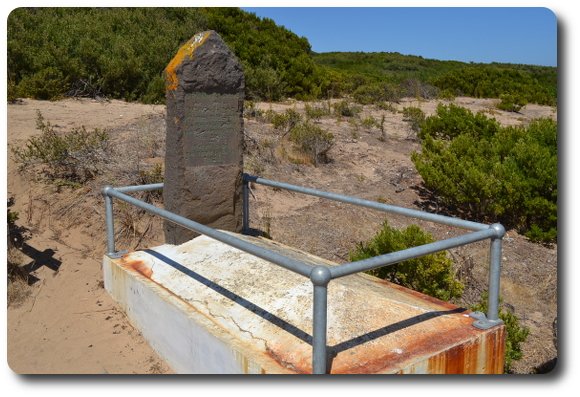
The mystery behind “Granny” of Granny’s Grave has finally been unravelled.

By Carol Altmann

One of Warrnambool’s most enduring mysteries has been the identity of the “Granny” buried at Granny’s Grave high in the sand hills of Lady Bay and now, more than 165 years after her death, she is to finally have due recognition.

The Warrnambool City Council will add a plaque to the grave site by the end of June that will correct a long-standing error that named “Granny” as Mrs James Raddleston – the name inscribed on the headstone – and confirm that she was in fact Agnes Ruttleton.

Very little was known about Agnes Ruttleton beyond the perfunctory details etched into her headstone that told us she died in 1848 and was the “first white woman buried in Warrnambool” which at that time was still part of NSW.

Bluestone, however, has pulled together the threads uncovered by various researchers to tell her full story.

We began with a bunch of history books and a visit to the Warrnambool & District Historical Society that holds a thin manila folder on Granny’s Grave which contains the bare bones of her life and identity.


grannys grave band
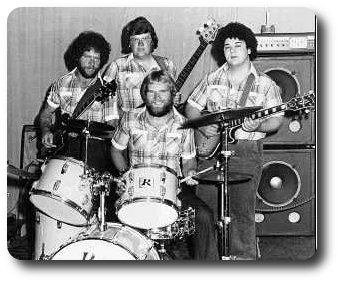
The Granny’s Grave band in the 1980s: Teejay Netherway, (left) Peter ‘Prof Walters, Eric ‘Coogee’ Read (drums) and John ‘Marra’ Maroniti (image: South-West TAFE archive).


The books and clippings reveal that Agnes and her husband – who was incorrectly named as a James Raddleston –  lived in a tent somewhere near Flagstaff Hill in 1847-48 and eked out an existence through odd jobs and selling crayfish. At that time, Warrnambool was just a speck, with the first land sales having been held in 1847 and its population at around 100.

Among the first people to buy land was Richard Osburne, the newspaper publisher and historian, who at the age of 22 bought a block on the corner of Kelp and Merri streets not far from where Agnes and James were living. Richard knew Agnes as “Granny”, probably because of her age (more on that later) and, it appears, became quite emotionally attached to the “old” woman.

When Agnes died in 1848, Osburne is named among a group of men who organised for a coffin and a funeral service to be held at a burial spot in the isolated dunes, as Warrnambool did not yet have a cemetery. A fence was built around her grave but years of scarifying wind, rain and shifting sands saw the fence – and entire gravesite – eventually disappear from view.

Indeed Osburne was mortified when he returned to Warrnambool in 1886 and despite “walking and walking” he was unable to find Granny Raddleston’s final resting place.

“I tired myself from the search,” he wrote in a letter to the local paper.


granny grave_4
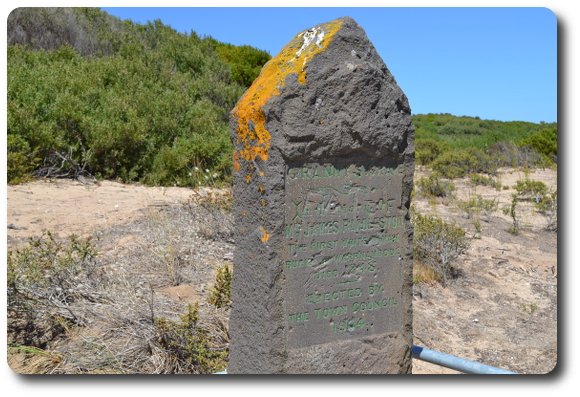
Granny’s bluestone headstone was finally erected in 1904 – more than 50 years after her death.


Osburne used his letter to implore the council to erect a proper headstone in honour of one of Warrnambool’s pioneering women, but nothing was done for almost another 20 years when, in 1904, a group of citizens raised funds for the bluestone headstone that stands today.

(In the intervening years, an anonymous resident used a piece from the 1888 wreck of the Edinburgh to mark Granny’s Grave – perhaps as a subtle hint for the council to hurry up.)

When the headstone was finally unveiled, it had Agnes reduced to “Mrs James Raddleston”, a person who did not technically exist, although it was not uncommon for name spellings to be mangled through either mis-spellings, poor handwriting or mispronunciation. Raddleston had been recorded as Rittleton, Ruttleton and Raddlestone.

And this is where Jenny Fawcett, from Warrnambool, comes in.


jenny fawcett_2
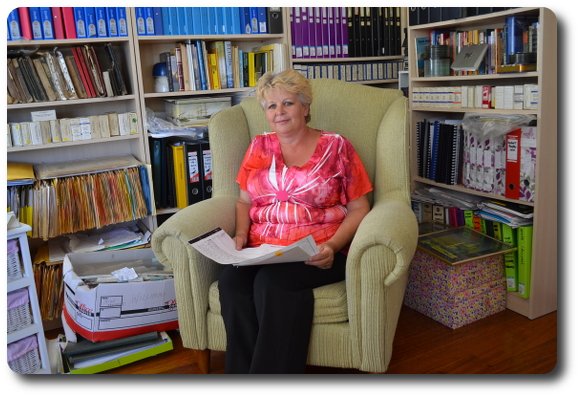
Researcher Jenny Fawcett in her library: she has devoted more than 20 years to uncovering the stories and mysteries of the south-west coast, including that of Granny’s Grave.


To call Jenny an amateur historian is a gross understatement: she is researcher unlike any other we have met before. Jenny has devoted hours of her time, driven by personal passion rather than profit, researching the history and characters of the south-west Victorian coast.

Her files are extraordinary, and her recall of individual details and events is mind-boggling.

It is Jenny who has reached back through time to find that Agnes Raddleston is Agnes Ruttleton and, in so doing, uncovered how James and Agnes came to be in Warrnambool.

“I like unravelling the mystery behind an individual, and Granny’s Grave is one of those stories that just had to be unravelled,” she said.

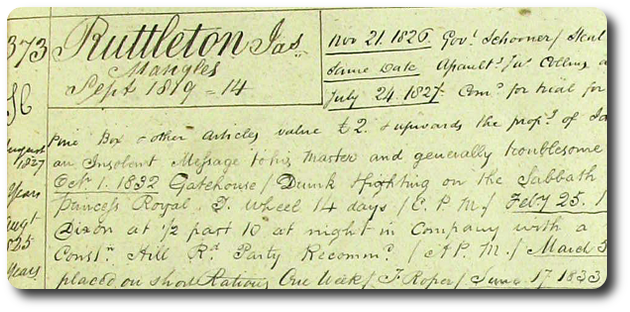
Through meticulous searching of convict records, Jenny traced James Ruttleton as an English boatman who was sentenced to 14 years for stealing and transported to Australia in 1820 – first to NSW, and later, after escaping, to Hobart Town. He was 31 years old.


grannys convict
Tasmanian convict records track the story of James Ruttleton, who was sentenced to 14 years for stealing.


After a variety of indiscretions, James was finally granted his Certificate of Freedom in 1834 and settled into a life in Tasmania.

Somewhere along the way, he met Agnes. Jenny has not been able to uncover her maiden name, or whether she was a convict too, but there is no record of James ever marrying.

“Maybe they were already married when he was sentenced and she joined him in Australia later, which could happen, or perhaps they were never married at all,” Jenny said.

What we do know, thanks to Jenny’s research, is that the pair sailed from Tasmania to Port Fairy on board the Essington in November 1846 and are listed as James and Agnes Ruttleton.

Both were then aged in their late 50s, but Jenny believes James may have been lured by the opportunity of better work. The Geelong and Portland Bay Immigration Society – which included Port Fairy – was keen to bring in labour.


agnes ruttleton list
Shipping records show the Ruttleton’s among the passengers on board the Essington bound for Port Fairy in 1846.


It appears the new opportunity didn’t quite work out, however, with James and Agnes living in virtual poverty for their final years.

Agnes died only 12 months after they arrived, at the age of 60, on December 13, 1848.

Agnes was also not the first white woman to die in the area.

Landholder John Allan (from Allansford fame), lost his first wife Jemima in 1842 and buried her on an island in the Hopkins River. There were most likely other deaths among the original sealers and settlers.

Agnes was, however, perhaps the first white woman to be buried in the newly proclaimed area of Warrnambool.

James Ruttleton died three years after Agnes, on June 15, 1851, and is buried in the Port Fairy cemetery…his death certificate incorrectly names him as John.

While Warrnambool’s infamous “Pioneers Board” (now housed in the library) doesn’t include any female pioneers among its faces, the Granny’s Grave plaque will recognise at least one of the many brave women who ventured to what was then nothing more than a tiny settlement behind the sand dunes.


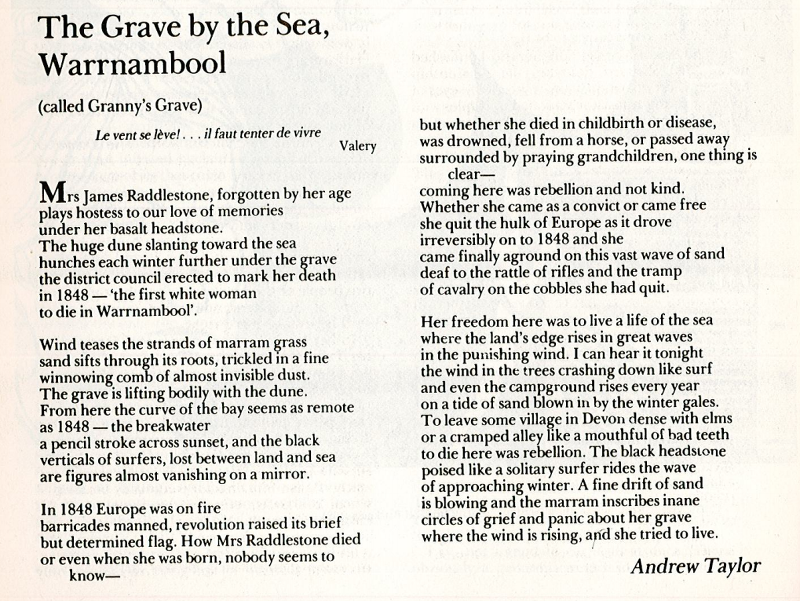
andrew taylor poem

 In researching this story, we uncovered a rare and beautiful poem about Granny’s Grave by Professor Andrew Taylor, who was born in Warrnambool. The Grave by the Sea, Warrnambool was first published in Quadrant Magazine in March 1981. Prof Taylor has kindly granted us permission to reprint his poem in full here. We would also like to thank Dr Simon Cooper for his efforts in finding a copy of the poem that, being written pre-computers, Prof  Taylor did not even have. He does now!