CLOSED , JUNE 24. Winners Katrina Brightwell and Janis Bennett
[dropcap style=”color: #8f9f59;”] W [/dropcap]e were delighted to get a call from the Bethany Arthouse Film Festival offering us some free double passes to give away to lucky paying subscribers.
The first of these double passes, to the magnificent film Fill the Void – screening in Warrnambool on August 5 – have already been offered via an email competition to our paying subscribers. To be in it, you must be a paying subscriber and be among the first five to email us at editor@bluestonemagazine.com.au.
We have two double passes (valued at $44 each) to Fill the Void and the winners will be announced later this week.
In the next couple of weeks will offer our paid subscribers the chance to win one of another two double passes, this time to the heart warming movie, Cloudburst, starring Olympia Dukakis, screening in Warrnambool on August 26.
If you are a paying subscriber, you will be notified by email when this competition opens.
Find out more about the Bethany Arthouse Film Festival here. To join the Bluestone Club as a paying subscriber – $8 per month or $85 per year – subscribe here.
Thankyou Bethany for supporting Bluestone Magazine.
Community vision needs to extend city wide
The imminent sale – and at least partial demolition – of the former Sandilands Hotel/Maddens Lawyers building in W’bool is expected to pave the way for new apartments in the CBD.
OPINION – JULIE EAGLES
A vision without a task is but a dream. A task without a vision is drudgery. But a vision and a task are the hope of the world. – Church in Sussex England, 1730.
[quote]
[dropcap style=”color: #a02f2f;”] I [/dropcap]n 2008, over several months, a great process of community consultation involving hundreds of people developed a community vision for the Warrnambool CBD called the Warrnambool City Centre Structure Plan. The vision was for an ‘alive, thriving, culturally rich city heart.’
We not only developed a community vision for the CBD, but also community values, community goals, preferred development scenarios and five future directions with strategic objectives – in other words – amazingly, we came up with a detailed framework to work towards achieving our community vision!
The people who facilitated this process were incredibly skilled and experienced. The process was fun, creative and interesting and there were lots of ways to participate.
Perhaps most amazingly – because I had never experienced it in Warrnambool before – was the ongoing and detailed feedback and updates to participants and to the whole community throughout the process.
It was, to quote Tanya Egan, (The Warrnambool City Council’s Business Support Manager) “the most exhaustive public planning process ever undertaken by Warrnambool City Council……in collaboration with the community.”
It was developed in response to a recognition that people were often “frustrated in the past because they hadn’t been asked for input from the beginning” – underpinned by the principle “that if a community is to own the plans that will shape their future, then it has to participate in developing them from the outset – not somewhere along the way.”
Very big tick.
The series of W’bool laneway events, like this print workshop run by South-West TAFE Creative Arts students, show what can happen when a community works together.
[dropcap style=”color: #a02f2f;”] I [/dropcap] felt very satisfied with that visioning and planning process six years ago. I am sure I’m not alone, however, in being frustrated that nothing much seemed to happen for a long time afterwards. Or was it that the communication lines seemed to falter and then stop?
After all, we’ve had the wonderful Lighthouse theatre re-development and then the fantastic laneways festival led by The F Project and supported by Council.
Most recently, in the past month, there’s been a follow up, and by all accounts also a very good, community planning process that honed in on re-designing the streetscape for two blocks of Liebig St stretching from Koroit St to Raglan Pde.
This time I chose not to take part, but I’m glad lots of other people did. I couldn’t quite understand how this process linked to what we’d done six years ago and so either the communication didn’t convey this clearly enough or I missed it.
It could be that I was just not that interested in redesigning two blocks of Liebig St – we don’t all have to be involved in every plan!
The campaign to Save the Silver Ball and Fletcher Jones Gardens grew from concerns about the loss of iconic buildings and structures in Warrnambool.
[dropcap style=”color: #a02f2f;”] I [/dropcap]n 2009, just after the community visioning process for the CBD, I joined the council’s City Development Advisory Committee where we received lots of information and requests for our input into all sorts of plans.
All of these plans were important at various levels, but I got lost in the detail and I couldn’t see the guiding vision and values that held them all together: I was interested in seeing the community vision, values and goals that guided all of these plans.
And this is what I would still love to see and what I think we really need: a community vision that inspires, guides and drives all our plans for development in Warrnambool (and our town centres of Woodford, Dennington and Allansford).
A community strategic plan, a city wide structure plan… whatever ‘planning speak’ might label it.
Developing a city-wide community vision is about shaping our future within the context of the changing and challenging global, national, regional and local worlds in which we exist. The people who ran the CBD visioning process six years ago understood this.
One of the questions they asked was – what are the external trends and issues affecting the City Centre today that may influence the future? The facilitators believed that within any community all the skills, knowledge, passion and capacity necessary to progress already exist.
They were guided by a set of principles for “helping groups move from uncertainty to purpose.”
These include that:
Council is part of the broader community team and not the fount of all knowledge and power.
Council’s role is to show leadership by bringing people together in an environment where everyone feels secure about sharing their hopes, aspirations and views and that, in a safe space, people will focus on common ground, not on difference.
For things to happen, Council must work collaboratively with all the players in that complex network of organisations and individuals that make the community function every day.
I was always thinking during that process – wouldn’t it be great if we were doing this not just for the CBD, but for the whole of our city!
A revamp of the northern end of Liebig St is the first major project to grow from the community driven CBD plan developed six years ago.
[dropcap style=”color: #a02f2f;”]A [/dropcap] city wide visioning process would allow community debate and discussion about our strengths and what we think are the key issues and challenges facing our city now and in the future.
It would allow us to talk about our aspirations and dreams and what we most value about our community and our natural and built environments. To talk about what give us our sense of place and belonging? What do we want to preserve, what do we want to create, what do we want to change?
Community visioning projects are now fairly commonplace across municipalities around Australia (and the world). The community visioning process for the CBD, that began 6 years ago, deserves to be replicated to a city wide plan.
In many ways, we can’t afford not to do this.
As somebody said to me recently “if you don’t know where you’re going, you’ll probably end up anywhere.”
[box] Julie Eagles has been a leader of the Warrnambool Planning and Heritage Group (WPHG) since 2006. ‘Save the Silver Ball and Fletcher’s Gardens’ campaign is an offshoot of WPHG and their work to highlight issues that contribute to demolition by neglect of important heritage places.[/box]
[button link=”http://the-terrier.com.au/subscribe-2/” type=”icon” icon=”heart” newwindow=”yes”] Did you enjoy this story? Please subscribe here to help Bluestone thrive.[/button]
[dropcap style=”color: #a5cecd;”]B[/dropcap]ricklayer Barry Knowles is the sort of person who is often described as “salt of the earth” and he very much lives up to this reputation.
The Warrnambool tradie – who was born in Merrivale – comes from a proud working class background where people were not afraid to give each other a hand, and where he learnt early that hard work was the only way to get ahead: no matter what your trade or profession.
Barry was recommended to us as somebody who would be prepared to help out with our project to restore the Robert Ulmann whale mural on the corner of Flaxman and Nicholson streets, even though we were relying on community funds to pay for the project and, therefore, had a limited budget.
As soon as we spoke to Barry, we knew we had the right person. He came down to the site, declared that it was something he could definitely help with, and that he would be proud to be involved so that when his grandkids walked past “they would know that I helped fix it”.
Barry’s skills will be used to repair the cracks and chips in the wall and remove or replace the metal fixtures that have rusted in the sea air.
Even though Barry is an absolute dyed-in-the-wool Collingwood supporter – a fact we can overlook for the moment (!) – he is very much our Quiet Hero for showing such enthusiasm and generosity toward the whale community project.
When we convinced Barry to be in this photo, he thought it was to help promote the project – and it is – but it is also a way for us to say thankyou, Barry.
[box] Barry will receive a coffee and cake voucher from Lozzar’s Lounge Cafe, Warrnambool. Thankyou, Lozzar’s, for supporting our quiet heroes.[/box]
[button link=”http://the-terrier.com.au/subscribe-2/” type=”icon” icon=”heart” newwindow=”yes”] Did you enjoy this story? Please subscribe here to help Bluestone thrive.[/button]
Retired: the second (and final) Fletcher Jones cross sits in council storage, having been replaced by a more modern cross that is erected on the Uniting Church. The whereabouts of the original FJ cross, first used in 1967, remains unknown*.
[dropcap style=”color: #a02f2f;”] W [/dropcap]ith the former Fletcher Jones factory in Warrnambool officially changing hands last Thursday (19/6), there has been a renewed focus on tracking down the iconic, original fixtures in the hope that they can be returned to the site, including the very first FJ cross.
New owner, the Geelong-born, China-based businessman Dean Montgomery, has indicated his willingness to restore the garden furniture and features, including what we call ‘The Man in the Pressed Pants’, but who was formally known as ‘the FJ man’, who once stood so proudly in his pleats at the front of the property.
The man, unfortunately, is now a broken shell of his former self. What does remain, however, has been enough to inspire Mr Montgomery to consider commissioning an artist to rebuild his legs and restore him to his full glory.
Another iconic piece of the original factory that is proving harder to trace is the original Fletcher Jones illuminated cross that was winched up the silver ball water tower each Christmas (and removed after every Easter) to cast its comforting glow across the city.
Up she goes: this image is believed to show the original, much heavier cross being hoisted into position using a boat winch. Image courtesy Amy Fitzgibbon.
[dropcap style=”color: #a02f2f;”] S [/dropcap]ir Fletcher Jones was a socialist Christian, or what might now be called a left-leaning Christian, who believed the cross would provide a gentle reminder of the role of Christ around an increasingly consumer-driven Christmas.
The cross was first erected when the silver ball was built in 1967 and, it is understood, was literally plugged into a powerpoint on top of the silver ball and ran off a timer.
At some time in the late 80s (nobody we spoke to was exactly sure when), this cross was replaced with a much lighter, aluminium structure that had light bulbs mounted along its sides.
This newer cross continued to be placed on the silver ball each year, right up until 2010 when the deteriorating condition of the ball made it unsafe.
In a now infamous move, the Warrnambool City Council (WCC) – who had taken over responsibility for the cross – found a new home for it on top of a west Warrnambool water tower, owned by Wannon Water.
The cross had barely been lit, however, before it was removed by Wannon Water after a single complaint by a resident, Graham Keith, who claimed that it was “religious advertising” on “public property”. (Mr Keith must have been apoplectic during all of those years that Sir Fletcher Jones and his family kept “advertising” their religious beliefs).
The second cross, with its somewhat antiquated light system, was relocated – briefly – to a water tower in west Warrnambool before a single complaint saw it removed in 2011. Image: Robin Sharrock, Herald-Sun newspaper.
[dropcap style=”color: #a02f2f;”] A [/dropcap]fter a fierce backlash to the decision by Wannon Water to remove the 2.5m tall cross, the WCC found a new home for it on top of the Uniting Church, in Koroit St, not far from where Fletcher Jones once ran his clothing store, “The Man’s Shop”.
The cross, however, again proved to be a safety hazard due to its basic lighting system. This cross – the second FJ cross – was retired and placed in council storage and a new, smaller cross, with environmentally friendly LED lighting, was built for the church to use.
What became of the original 1967 cross, however, remains a mystery, despite our attempts to track it down*.
The Uniting Church has certainly had never seen it, and the WCC only have the second cross in storage.
WCC media spokesman Nick Higgins sent us the following words about the mystery:
“Our infrastructure chief thinks the wooden cross may have its origins in the 1960s. It’s possible it was replaced with aluminium, not because it was rotten, but because aluminium was lighter and easier to install. But we don’t know for certain – this was at a time when the council was not closely involved with FJs.”
The second Fletcher Jones cross shone like a beacon across the Warrnambool skyline for more than 25 years, after replacing the original cross that was first erected in 1967. Image: Courtesy Mitch Stansfield.
[box] Former Warrnambool City Council planner and photography enthusiast Lisa Gervasoni is one of the few people to photograph the cross on all three structures. Lisa no longer lives in Warrnambool (although she maintains close ties), but she kindly gave us permission to reproduce the three images below:[/box]
[button link=”http://the-terrier.com.au/subscribe-2/” type=”icon” icon=”heart” newwindow=”yes”] Did you enjoy this story? Please subscribe here to help Bluestone thrive.[/button]
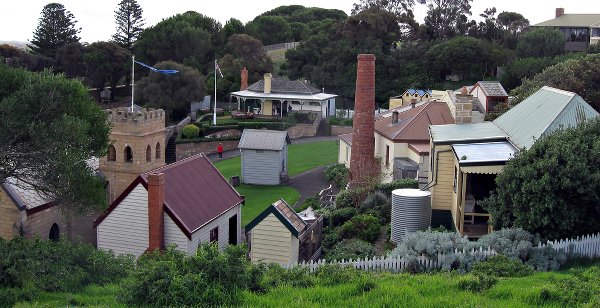
Warrnambool’s Flagstaff Hill is at a crossroads and requires a long-term commitment of $15million to prosper. Image: letsgotravelaustralia.com
OPINION
With all the excitement around the sale of the Warrnambool Fletcher Jones site, important details on the future of another prominent site in the city – Flagstaff Hill Maritime Village – have slipped by virtually unnoticed.
But despite the distractions, we do need to talk about Flagstaff Hill – or “Flaggy” as it is called by those closest to the action – because unlike the FJ site, which was privately owned, this one is costing us money.
At the moment, the Warrnambool City Council is absorbing an annual deficit of around $500,000 for the 40-year-old Flagstaff Hill Maritime Museum due to falling visitor numbers that have tumbled from 80,000-plus a year to below 60,000. As I have written before, the village needs at least 80,000 visitors a year to break even.
While profit is not everything when it comes to community assets, something significant needs to be done to turn things around, or – it has now been confirmed – the site will cost the council (ie. ratepayers) almost $9 million in “losses” over the next 20 years.
It is crunch time and the crunch is that almost $15 million must be spent in the next three years on Flagstaff Hill to make any real difference to its future.
This is the conclusion reached by consultants, Coffey Sport and Leisure, who were paid $90,000 to prepare a masterplan that mapped out how to turn the site around and whose final report was recently made public.
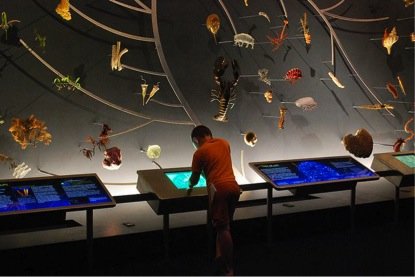
The masterplan includes images of what a new interactive discovery centre might look like at Flagstaff Hill.
The masterplan set out a number of scenarios – from do nothing, which would eventually see the site close – through to an all bells-and-whistles affair that would cost almost $26 million.
The report ultimately recommended a middle ground that would cost $14.8 million over three years and, potentially, turn the site into a profitable venture by doubling the number of visitors over the next 20 years.
The “middle ground” plan includes broadening the whole theme of the centre to the Great Southern Ocean (which, to some extent, has already begun); building a new, sexy interactive discovery centre that captures the stories of the Great Southern Ocean (from indigenous history, to whales, to shipwrecks); upgrading the existing sound and light shows; giving free access to the colonial village; adding another cafe and introducing food/wine events; and linking the whole site up with Lake Pertobe and Cannon Hill.
To make it happen, the council would need to chip in 25% of the total cost – ie. around $4 million – and the remainder come from state and federal funds, which, given the harsh cuts within the last Federal Budget, would be difficult.
The most important point, however, is that the report makes it clear that this plan is the very least that is required if Flagstaff Hill is to remain relevant and viable.
In other words, unless we are able to find almost $15 million in combined ratepayer and taxpayer funds, we are pretty much wasting our time and delaying the inevitable.
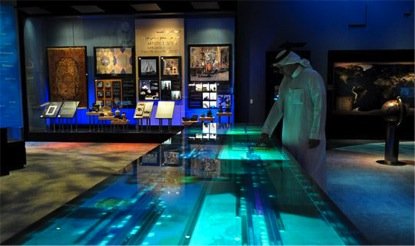
Another image from the masterplan report that shows how Flagstaff Hill might improve its displays which were described as “uninspiring and static”.
The council knows this, but it also knows that trying to find a spare million or two in its budget right now is almost impossible.
As a result, it recently agreed to contribute $500,000 in 2014-15, and another $500,000 the following financial year toward a $3 million upgrade of the very-dated Shipwrecked sound and laser night show, plus some other minor improvements. It hopes the state and federal governments will at least chip in another $2 million between them.
It is a Band-Aid on an oozing knee, but the council somewhat optimistically hopes that this will lift visitors to its night show by 30%.
I say optimistically, because sound and light shows were a big deal in 2002 – when Shipwrecked began – but people now have access to such technology in their own lounge rooms and will expect something pretty special.
Still, it is a start, but the conversation that still needs to be had is whether the community wishes to see up to $15 million spent on the site over the next three years.
Cashed up private investors like Dean Montgomery, who recently bought the Fletcher Jones site, may prove critical to the long-term survival of Flagstaff Hill.
The council sought public feedback on the masterplan last year, and while the 145 people who responded said they wanted to see Flagstaff Hill continue, it is only now being laid out in black and white as to what funds will be required to make that happen in any robust way.
Indeed, the total cost of the long-term plan is rarely mentioned at all, but instead its is framed as a “staged development”. (There was certainly no mention of $14.8 million in the council’s most recent media release on the issue.)
There is also regular reference to the council seeking private investment for the site, in the hope that – once again – a cashed up white knight will come and save the day for Warrnambool.
Unfortunately a Dean Montgomery only comes along once in a blue moon and he has grabbed hold of the Fletcher Jones site where, unlike Flagstaff Hill, the conversation became very public, very frank and, ultimately, very productive.
So, do we spend $15 million on Flagstaff Hill in the next three years to turn its fortunes around, or not?



 Find more Opinion pieces here…

 Meet our other Quiet Heroes…