Flagstaff Hill: a museum in transition or a mess?

Flagstaff hill
The cracks in Flagstaff Hill’s museum collection are being revealed as a result of persistent questioning by those concerned about missing items. Image: Bluestone Magazine.

OPINION – Carol Altmann

[dropcap style=”font-size: 60px; color: #A5CECD;”] W [/dropcap]arrnambool’s Flagstaff Hill Maritime Village has finally admitted that it has lost more than 100 items from its collection in what is a clear indication that all is not well down on the hill.

Privately, people who have had a long association with the village either as former staff members, volunteers, or long-term supporters are questioning how has it all gone so wrong and, more importantly, can it be fixed?

In response to my piece last weekend in which I asked if the missing Loch Ard ingots were the tip of the iceberg (they were), FHMV manager Peter Abbott wrote a letter to the local newspaper in which he confirmed that at least 129 items donated to the museum could no longer be accounted for.

This is not about a clerical error on a database, this is about losing irreplaceable items that were given to Flagstaff Hill for protection. Put simply, despite being an accredited museum, Flagstaff Hill has no idea where these objects are because of years of poor record keeping and poor storage.

As to be expected, Mr Abbott used his letter to downplay the issue, referring to a missing bar of soap and a “small tin”, but even a single button can be valuable depending on who wore it: that’s what museums are about.

The 129 missing objects are not a comprehensive list.

Bluestone has since learned, for example, that the very first items donated to Flagstaff Hill back in 1973 are also missing. They are a lamp that is believed to have come from the Loch Ard, and a police lamp, believed to have been used in the search for survivors from the Loch Ard.

These are not insignificant items.

Copper Sheets-2
Copper sheets salvaged from the wreck of the Loch Ard have been damaged since coming into the possession of Flagstaff Hill, including a large cut to one sheet in the Bond Store.

[dropcap style=”font-size: 60px; color: #A5CECD;”] I [/dropcap]t should also come as a shock to learn that while the copper sheets from the Loch Ard (1878) are not missing, some have been cut up.

As I wrote last week, these 10 sheets were given to the village by the Federal Government in 1984 and were supposed to be housed under a loan agreement that, until recently, had been forgotten about.

The online listing for the copper sheets confirms: “One sheet appears cut or severed in a diagonal line downwards from its top left hand corner. One sheet has a 10cm X 10cm square cut out of its top right hand corner.”

The sheet that has been virtually sliced in half can be found inside the Bond Store.

When asked about these two sheets, Mr Abbott referred me to a third sheet, now housed at the Port Campbell Tourist Information Centre, that had a small drill hole added so that it could be secured to the wall (the people responsible apologised to Flagstaff Hill in 1993 for their mistake.)

Mr Abbott didn’t explain why these more recent and much larger cuts were made, but it has been suggested that at least one piece was used to create a copper sculpture.

FHMV also considers it acceptable to store some of the remaining sheets – those twisted by the blast during their salvage – outside in the weeds near the Barracks, as if they were storing bits from Bunnings, rather than relics from the Loch Ard.

loch ard copper
Buckled copper sheets (centre) from the wreck of the Loch Ard are “stored” among the weeds and an assortment of other items outside the Barracks. Image: Bluestone Magazine

[dropcap style=”font-size: 60px; color: #A5CECD;”] M [/dropcap]r Abbott also used his letter to confirm that the brass bell from the wreck of the Newfield (1892) has disappeared after being removed during renovations in 2002 – 13 years ago.

Bluestone has been told that Flagstaff Hill was alerted to the missing bell back in 2009, but did nothing: there was certainly no public call for its return.

In fact the whistleblower who first raised concerns about the security and integrity of the collection management process has since left Flagstaff Hill in frustration.

None of this, it must be said, is the fault of the volunteers who provide countless hours of unpaid labour to try and fix problems that have been years in the making. They are doing their best and I saw that first-hand during a visit last Friday.

The volunteers, however, are history enthusiasts, not experts. Mr Abbott, similarly, comes from a tourism management background rather than a curatorial one.

Indeed one of the few people on staff who had a qualification in cultural heritage management, Helen Sheedy, has this year left Flagstaff Hill to work elsewhere in the council.

It is hard to imagine the Warrnambool Art Gallery being managed with so few expert hands and I can just imagine the outcry if it lost more than 100 artworks along the way.

In the meantime, Flagstaff Hill has gone from being a profitable venture – where it made money for the council – to one that now loses about half a million dollars a year.

Whether Flagstaff Hill is given the resources it needs to operate a well-oiled museum like it did in the 70s, 80s and 90s remains to be seen, but the cracks are starting to show and, for those who donated their items in good faith, the revelations of the past few days will be shocking.

[box]If you would like to do a Flagstaff Hill back-of-house tour of your own, you can join the free tour this Wednesday Jan 14 at 11.30am and 6pm. [/box]

[button link=”http://the-terrier.com.au/subscribe-2/” type=”icon” icon=”heart” newwindow=”yes”]To help Bluestone continue its work with Opinion, please subscribe here for just $85 a year.[/button]

Stones Smile newsletterYou can find more Opinion here…


Are missing Loch Ard ingots the tip of the iceberg?

The changing landscape under Midfield Meats

Street artist secures W’bool mural project

Sucking the wind out of Portland’s sails

Granny’s Grave buried in bureaucracy

All words, no funding, for Fletcher Jones story


Are missing Loch Ard ingots the tip of the iceberg?

loch ard ingots_3
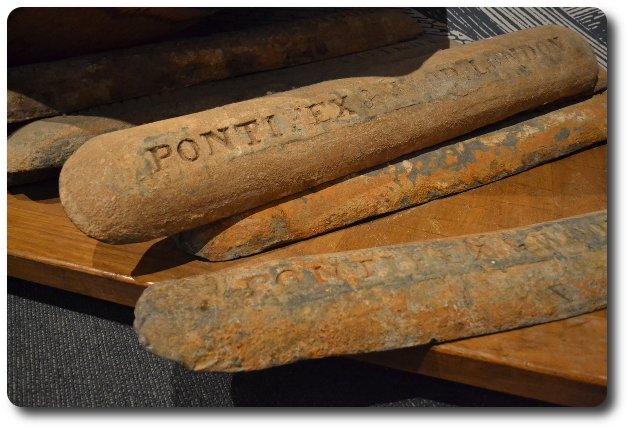
Ten of the original 872 lead ingot weights from the Loch Ard that were loaned to Flagstaff Hill by the Federal Government in 1984: more than 200 have since gone missing. Image: Bluestone Magazine


OPINION – Carol Altmann

[dropcap style=”font-size: 60px; color: #5C747D;”] H [/dropcap]ow did Warrnambool’s Flagstaff Hill Maritime Village lose track of more than 200 lead ingots that were part of the most famous shipwreck in Australia – the Loch Ard – given to it by the Federal Government for safe keeping?

This is a question that has the Warrnambool City Council scrambling for answers but – so far – the explanations have only raised even more questions about how the maritime collection has been managed and whether more irreplaceable items may have fallen through the gaps. (*Update: Flagstaff Hill has since confirmed more than 130 items are missing from its collection, including the Newfield bell from 1892.)

Cr Brian Kelson started asking about the location of all the Loch Ard (1878) ingots late last year and the information that has been provided since has been surprising, in terms of how loose the record keeping and storage has been around relics that should be considered precious.

In a written report to council at its December 1 meeting, the Flagstaff Hill advisory committee revealed that 872 lead ingots and 10 copper sheets from the Loch Ard were loaned to the village by the Federal Government in 1984.

They have a written agreement to prove it, but unfortunately it would be almost 30 years – yes, 30 years – before Flagstaff Hill did a full count of the ingots, each of which weighs around 60kg but, because of their French-stick shape, can be carried by two people.

That count was in 2012 and they could only find 728 of the 872, meaning 144 had somehow vanished, which is not surprising given there was no proper audit for almost three decades.

Some of the Loch Ard ingots stacked alongside the Flagstaff Hill lake.
Some of the Loch Ard ingots stacked alongside the lake at Flagstaff Hill in Warrnambool. Image: Bluestone Magazine

[dropcap style=”font-size: 60px; color: #5C747D;”] T [/dropcap]he advisory committee admits that this number – 728 – wasn’t cross-checked, but it was still added to the Flagstaff Hill database.

Another count was done in 2014 and could only locate 652 of the 728, meaning another 76 ingots were added to the already missing 144, bringing the total now missing to 220.

Oddly, however, Flagstaff Hill has brushed off the missing 144, saying it could have been an error in the original loan agreement, which I would say is unlikely, given it was an official government document that was dealing with maritime treasures. (Update: see former FHMV director Peter Ronald’s comment at the end of this piece, confirming the initial intake.)

There has also been no mention of the 10 copper sheets – does Flagstaff Hill still have them?

The copper sheets were listed as item no. 3078 on its public database – that was until last November, when the listing disappeared. (Update: the copper sheet listing has been reinstated, together with a copy of the federal loan agreement. You can see both here.)

The council’s focus has been narrowed to finding the 76 ingots missing from the 2012 count, and this is where things have become quite bizarre.

Flagstaff ingots_10
Some of the 286 ingots that are stored inside the Reginald M moored on the lake at Flagstaff Hill. Image: Bluestone Magazine

[dropcap style=”font-size: 60px; color: #5C747D;”] F [/dropcap]irst, at the same December 1 council meeting, council CEO Bruce Anson gave a verbal update to Cr Kelson in which he said that another count had been taken and 64 of the missing ingots had been found in a false floor of the Reginald M: one of two boats in the Flagstaff Hill lake.

A false floor? We took a look inside the Reginald M at the weekend and counted 286 ingots – the same number in the advisory committee report – and there were no signs of any ingots in a false floor (but, as an aside, plenty of signs of a rotting floor filling up with water).

Mr Anson went on to say that any remaining missing ingots were inside the hull of the nearby derelict Rowitta.

This reassurance was repeated in the local newspaper on December 23, although Flagstaff Hill manager Peter Abbott said it was too unsafe to actually count the ingots in the Rowitta, but his people could “peer in”.

Mr Abbott then revealed that some ingots could also be in the mud at the bottom of the lake, thrown there by night-time intruders. What? When did this happen and were police notified of a break-in at Flagstaff Hill?

More slivers of the puzzle came to light at the weekend when the local newspaper reported that some ingots were being used in Port Fairy while another, not necessarily from Flagstaff Hill, may have been sold at a local clearing sale.

A close-up of the Loch Ard ingots, each of which bear the maker's mark.
A close-up of the Loch Ard ingots, each of which bear the maker’s mark. These are among 10 on display in the Great Circle Gallery at Flagstaff Hill in Warrnambool. Image: Bluestone Magazine

[dropcap style=”font-size: 60px; color: #5C747D;”] S [/dropcap]o how many Loch Ard ingots have we actually got on display, in storage and in the mud at Flagstaff Hill?

I don’t know, I am lost, but I counted a total of 647 when I was there on Saturday.

To throw a final curve ball into the mix, the council’s director of city growth, Bill Millard, who sits on the Flagstaff Hill advisory committee, sent a memo to all councillors on December 10 saying that “the most recent count” identified the location of 802 ingots and he was “confident” that the ingot collection was intact.

Mr Millard may be confident, but the rest of us have a right to be utterly confused.

By any account, the audit of the Loch Ard ingots is an embarrassing mess caused by years of inaction to update the paper-based (yes, paper-based) collection system at Flagstaff Hill.

It is now being left to Peter Abbott – who, in what must be a vast role, is also head of council’s tourism services – and his team of largely volunteers to untangle it.

Perhaps most troubling, however, is how many more precious objects have “gone missing” from the thousands collected by or donated to Flagstaff Hill over the last 40 years?

There are already rumblings about items such as Newfield bell, which once hung in the Great Circle Gallery at Flagstaff Hill, but no longer even appears on its collection database.

While the analogy may be more suited to the Titanic  than the Loch Ard, I fear that the missing ingots may prove to be just the tip of the iceberg.

[button link=”http://the-terrier.com.au/subscribe-2/” type=”icon” icon=”heart” newwindow=”yes”]If you would like see Bluestone survive, please subscribe here for just $85 a year.[/button]

Stones Smile newsletterYou can find more Opinion here…


The changing landscape under Midfield Meats

Street artist secures W’bool mural project

Sucking the wind out of Portland’s sails

Granny’s Grave buried in bureaucracy

All words, no funding, for Fletcher Jones story


The changing landscape under Midfield Meats

sandilands down
The 1940s former Madden’s building – built by Ern Harris – has been demolished to make way for a new apartment complex as one of three major projects that will change the shape of Warrnambool next year.

OPINION – Carol Altmann

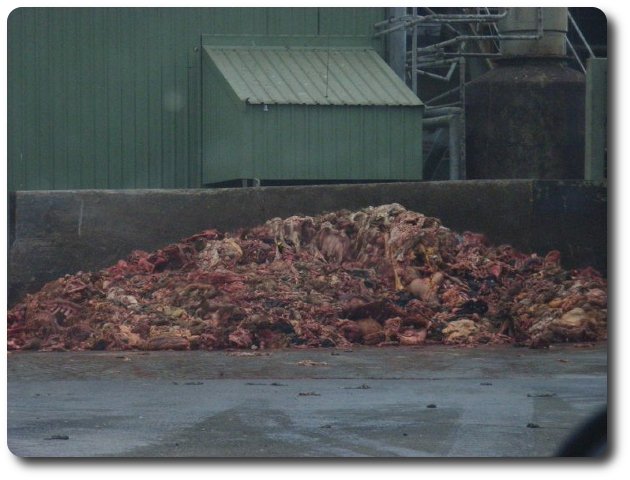
* A warning, this piece includes a graphic photo from the Levys Point rendering plant which some readers may find distressing.

Next year is shaping up as a defining one for the long-term future of Warrnambool and its residents, with three major projects that will change the landscape for decades to come.

  • The first is the proposed 34m-high milk processing plant and an adjacent 29m-tall cold store that will both operate 24-hours a day, seven-days a week in Scott St, Merrivale.
  • The second is a $3 million upgrade of the rendering plant at Levys Point that sits adjacent to the Merri River wetlands and the Warrnambool-Port Fairy rail trail.
  • And the third is a nine-level apartment and penthouse complex to replace the former Madden’s building on a prime site overlooking Merri/Gilles streets.

All three projects are linked to one of the most successful businesses and businessmen in Warrnambool: Midfield Meats and its founder, Colin McKenna, who, understandably, are always looking for opportunities to expand and build upon their already multi-million dollar status. There is nothing wrong with that.

The problem, however, is that the consequences of such expansions on the rest of us – the little people and our city – can be significant and irreversible.

As such, we have one chance to get it right, lest it all go so horribly wrong, and this is where we look to our civic leaders to act in the best interests of us all.

So far, however, most of the Warrnambool City Council and its elected members have appeared reluctant to rigorously press, probe and challenge the merits of all three projects put forward by one of Warrnambool’s most high-profile businesses, as if any “progress” is good progress.

rendering plant fb page
It is not pretty, but a mountain of dead animal remains is the reality of the rendering plant at Warrnambool’s Levy’s Point which is on the W’bool-Port Fairy rail trail and can be seen when the gates are open. Image: Merri Wetlands Protection Group.

Let’s start with the rendering plant at Levy’s Point, which was built in the 1970s at a time when the area was considered way out of town and nobody gave much thought to the environment.

In 2014, both of these things have changed dramatically.

We now care that a rendering plant is right next door to a beautiful wetlands and not only is it no longer isolated, but the Port Fairy-Warrnambool rail trail passes by its front door.

I had been warned that if you cycled along the rail trail, you could be confronted with the clawing stench and shocking sight of dismembered animal parts pushed into a meat mountain, but I didn’t quite believe it.

But yes, it is true and I can’t begin to imagine what tourists must think when they stumble across this sensory assault. The residents of nearby Merrivale, of course, have been living with the stench for years.

It is not the fault of Midfield Meats that they have inherited this location, but its application for new works at the plant provides a rare opportunity to strongly argue that it is time to relocate.

This is exactly what the Merri Wetlands Protection Group – a five member, volunteer based group will argue when it presents its case to VCAT in April.

The majority of our councillors – Crs Ermacora, Hulin, Sycopoulis and Kelson – actually agree with them, but the final position taken when two of these councillors were absent saw the vote of Crs Neoh, Gaston and Askew turn opposition into support. Go figure.

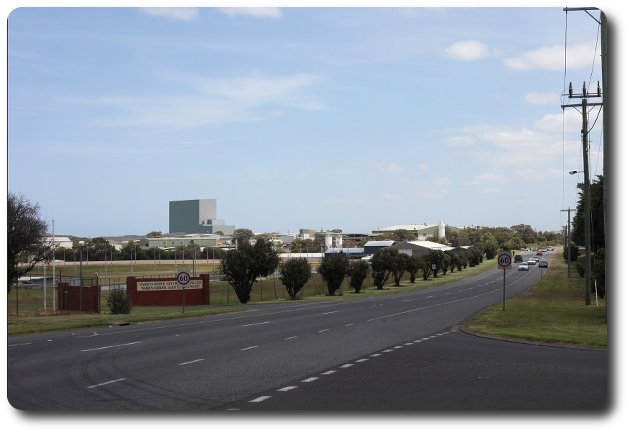
How the proposed milk processing factory will appear on the skyline near the Warrnambool Showgrounds. Image: Warrnambool City Council.
How the proposed cold storage facility will appear on the skyline near the Warrnambool Showgrounds according to planning documents. Image: Warrnambool City Council.

midfield - merrivale
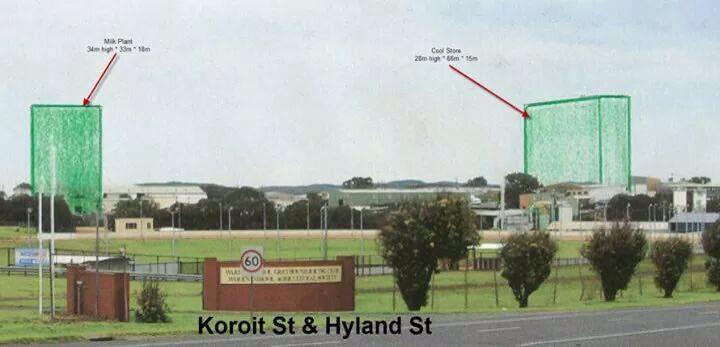
This is how the ‘We Love Merrivale” group envisages the new milk powder and cold storage buildings will look from the Warrnambool showgrounds. Image: We Love Merrivale.

Then there is the proposed milk processing plant and cold store that will tower over the inner industrial estate and create a whole new set of issues for the people of Merrivale while adding a 10-storey and a nine-storey shed to the skyline.

In a complex set of transactions involving state and local government, the council has bent over backwards to accommodate the Midfield plans by selling them part of its depot land, yet CEO Bruce Anson said recently he had no idea the site was intended for a milk powder factory until shortly before settlement.

So again it has been left to the little people, like the We Love Merrivale group, to stand up and challenge the idea of a factory being built so close to their homes, because regardless of the assurances given about dust emissions and noise, they are the ones who will have to live with it in their backyard.

Proposal for corner of Merri and Gilles streets October 2014
The nine-level Warrnambool Apartment complex proposed for the corner of Merri and Gilles streets. Image: Warrnambool City Council.

And lastly we have the nine-storey Warrnambool Apartments project that will dominate the end of Merri and Gilles streets.

This complex will replace a 1940s art-deco building that had been recommended for heritage protection, but was rejected by the council, allowing its recent demolition. (Ironically, the council is now seeking a heritage overlay on the house next door, which was built at the same time, by the same builder.)

Irrespective of what you think of the design – personally, I think it is more suited to Melbourne’s Docklands than Gilles St – the sheer height of the building at almost 30 metres is at odds with the council’s planning guidelines for the area that say buildings should be no more than 7.5m (in one section) and 10.5m (in another).

As Julie Eagles from the Warrnambool Planning and Heritage Group said so succinctly at a recent on-site briefing for objectors, “given the council’s own guidelines, what are we even doing here?”

What, indeed.

2015 is shaping up as a defining year for both our city, its leadership and grassroots activism – watch this space.

milking merrivale
The “We love Merrivale” group has started a campaign to stop a proposed milk processing factory from being built in the area. Image: We Love Merrivale.


A musical career with strings attached

philip trigg_36
Musician Philip Trigg runs through a few bars of Bach in his studio at Purnim West, which is still surrounded by the dairy farms of his youth.


Words and photos by Carol Altmann

[dropcap style=”font-size: 60px; color: #A02F2F;”]M[/dropcap]usician Philip Trigg is the sort of person who would be quite content as a drummer for Abba or a keyboardist for the Bee Gees: part of the show, but happily anonymous.

And while Philip’s skill is in playing classical rather than pop music, he has been part of the south-west music scene for virtually his whole adult life as a violinist, cellist, pianist and teacher of all three instruments.

It is not, perhaps, the usual path for a kid who grew up surrounded by dairy farms in Purnim West – where he still lives – and who attended the rough-and-tumble-trade-driven school, Warrnambool North Tech (now part of Warrnambool College).

“There were certainly no music lessons at school, so I had to take private lessons outside of school with Miss McConachie,” Philip says.

Miss McConachie – who everyone still refers to only as Miss McConachie, never by her first name – was a legendary music teacher in Warrnambool and she proved to be an influential force on Philip.

“Miss McConachie would keep telling me I had to feel the music, to imagine I had a string on the end of my nose attached to the piano keys and bend right into it, but I always struggled,” he says, smiling.

A school-aged, curly hair Philip Trigg on violin (centre).
A school-aged, curly hair Philip Trigg on violin (centre) in a newspaper clipping from the Portland Observer.

[dropcap style=”font-size: 60px; color: #A02F2F;”]F[/dropcap]rustrated by Philip’s slow progress with the piano, Miss McConachie made a number of suggestions to her young student that would prove pivotal.

The first was to encourage him to choose another instrument alongside the piano: either classical guitar or violin. He chose the violin.

The second was to join the Warrnambool Theatre Company as an accompanist under the direction of the late Cyril and Joyce Haywood, to boost his confidence by taking his music to the stage.

And the third was to recommend he read a love story written in 1904 by American author, Myrtle Reed, called “The Master’s Violin ” that appears to leave a lasting impression on all those who read it.

“I don’t remember much about the story line now,” Philip says, holding a precious copy of Reed’s book, “but I know it really made an impact on me at the time.

“Miss McConachie believed that you never really feel music until you experience sorrow and I came to understand that, especially as you go through various relationships in your life.”

The weeping, soaring, sweeping sounds that can come from a violin or cello proved to be the ones that grabbed hold of Philip’s heart.

“There is so much more feeling you can get from a violin. When you play a note on a piano, there is only so much you can do with that one note, but a note on a violin can go anywhere,” he explains.

cindy lee quartet
Philip, third from right, with the original members of the Cindy Lee Ensemble that started 25 years ago and is still going strong. Image: Cindy Morgan.

[dropcap style=”font-size: 60px; color: #A02F2F;”]A[/dropcap]ll three instruments – violin, cello and piano – are now constants in Philip’s life and he moves between all three, depending on the occasion.

Those early links with the WTC led to his becoming a founding member of the Cindy Lee Ensemble, started by Cindy Morgan 25 years ago, and he still plays piano accompaniment for the vocal group each Tuesday night in Koroit.

He has also played violin and cello with the Warrnambool String Quartet and the Robin Wright Strings, and teaches music at Emmanuel College, Kings College and Timboon P-12, together with private lessons.

One of his most memorable achievements, if a little unusual, was to be part of a marathon session more than 10 years ago in Port Fairy, where a group of pianists played a work by French composer, Erik Satie, for 24 hours non-stop.

Each musician played an electronic keyboard for two hours and Philip managed to complete his stint, despite some larrikin literally pulling the plug on the instrument twice.

“I just kept playing with no sound coming out. After all, the show must go on!”

While Philip is regularly on stage, including as an accompanist during the annual City of Warrnambool Eisteddfod, he rarely performs solo.

“I like the accompanist role: the show can’t go on without us, but I would prefer that you didn’t know I was there,” he laughs.

philip trigg_26
Having started with piano in secondary school, Philip found he had more strings to his musical bow and learnt both violin and cello which, he believes, can evoke so much more feeling from each note.

[button link=”http://the-terrier.com.au/subscribe-2/” type=”icon” icon=”heart” newwindow=”yes”]Bluestone is aiming for 500 subscribers. If you enjoyed this story, please click here to become one![/button]

newsletter Eat And Drink Stones  If you enjoyed this story, you might also enjoy…


Riding the waves of artistic endeavour: Robbie Williams

Revealing the eye of the tiger: Peter Clayfield

Spreading joy through art: Kathryn Weatherly

Remembering the work of Robert Ulmann

The twists and turns of textiles: Ruby Richardson


Wood carving part of a chain reaction

chainsaw art_26
Brad Hunt, of Warrnambool, was a wooden boat builder before turning his hand to chainsaw sculpture. He now transforms pieces like these oak stumps into smooth works of art.

Words and photos by Carol Altmann

[dropcap style=”font-size: 60px; color: #DC943C;”] T [/dropcap]here is something incongruous about a big Stihl chainsaw being able to transform a slab of wood into a delicate work of art, but this is exactly what Brad Hunt is perfecting.

The former wooden boat builder – he served his apprenticeship with Port Fairy master craftsman Garry Stewart – has taken his love of timber and a strong creative streak to start his own small business, the wonderfully named Pull Start Art.

Working from his father’s shed on Hopkins Point Road, Warrnambool, Brad creates smooth sculptures from a whole range of timbers, including cypress pine, redgum, black wattle and eucalypts or whatever offcuts have come his way.

“These are from 100-year-old oak trees,” he says, slapping the rough bark on a pile of stumps, some of which are almost as tall as he is.

The leftover oak was donated by a farmer who was going to push the tree stumps into a pile for later burning, “and I said, ahhh, ‘no you’re not!”’ Brad laughs.

He has similarly come by bits of timber from the original Hopkins River bridge, lumps of cypress pine found by the roadside in Melbourne and other workable logs that were destined for the scrapheap until either Brad, or his friends, intervened.

chainsaw art_48
A whale figure carved from redgum. Marine creatures feature prominently in Brad’s work.

[dropcap style=”font-size: 60px; color: #DC943C;”] U [/dropcap]sing one of three Stihl chainsaws, including a dime-tipped bar designed specifically for carving, Brad turns a piece of non-descript raw timber into something quite different. Sometimes it will be a whale, a dolphin or perhaps a pelican, and another it could be a chicken, horse’s head or dragonfly.

It all depends on either what he has been commissioned to make, or what he “sees” in the wood.

“Certain logs lend themselves to certain things,” Brad says, “and I can just see what I want to make from it”.

Brad can spend a week “looking” at a log, waiting for its character and shape to settle in his mind, before he starts work with the chainsaw: after all, it is not like you can start again.

“If a design doesn’t work out, and that can happen, then I will often make a smaller carving from what is left,” he says.

chainsaw art_66
Sanding and polishing is where the most time-consuming work takes place.

[dropcap style=”font-size: 60px; color: #DC943C;”] A [/dropcap]fter the initial, relatively energetic chainsaw work on a piece, Brad settles into the more refined and much quieter stage of sanding and polishing, which is when the timber really comes to life.

“It really puts a smile on your face when the timber reveals itself to you through its different grains and colours,” he says.

“That is the part that I really enjoy.”

Chainsaw art is not quite where Brad, 33, imagined he would be when he first left school and enrolled in a commerce degree before realising he was not someone “to sit behind a desk” but needed to work with his hands.

The boatbuilding apprenticeship was advertised in the paper, and Brad secured an opportunity that would see him not only learn a traditional craft, but take him to the tiny Pacific island of Kiribati as a volunteer helping locals to build various watercraft.

chainsaw art_54
We’ve heard of a wooden duck, but a wooden chook? Why not?

[dropcap style=”font-size: 60px; color: #DC943C;”] A [/dropcap]fter experiences like that, it is almost impossible to settle into a regular 9-5 job, so Brad decided to create his own.

Supported by the New Enterprise Initiative Scheme (NEIS) and part-time work at Deakin University, Brad launched Pull Start Art in June – and is slowly building a name for himself.

When we meet, he tells me about a major in situ commission where he will transform a 2.1m cypress pine stump on a property into a majestic horse’s head.

And while commissions are an important part of his work, he would ultimately like to see his work in local galleries.

“That’s the artistic process for me – using my own ideas and my own creativity.”

chainsaw art_72
One of the first – and largest – pieces Brad has done to date is the whale at the front of his parent’s property in Warrnambool.

[box]The Pull Start Art studio and workshop is at 29 Hopkins Point Rd, Warrnambool (look for the whale). Ph: 0438 517 200. You can also find it on Facebook here. Brad will give a demonstration of his work at the Koroit Truck Show on the Australia Day long weekend, 2015.[/box]